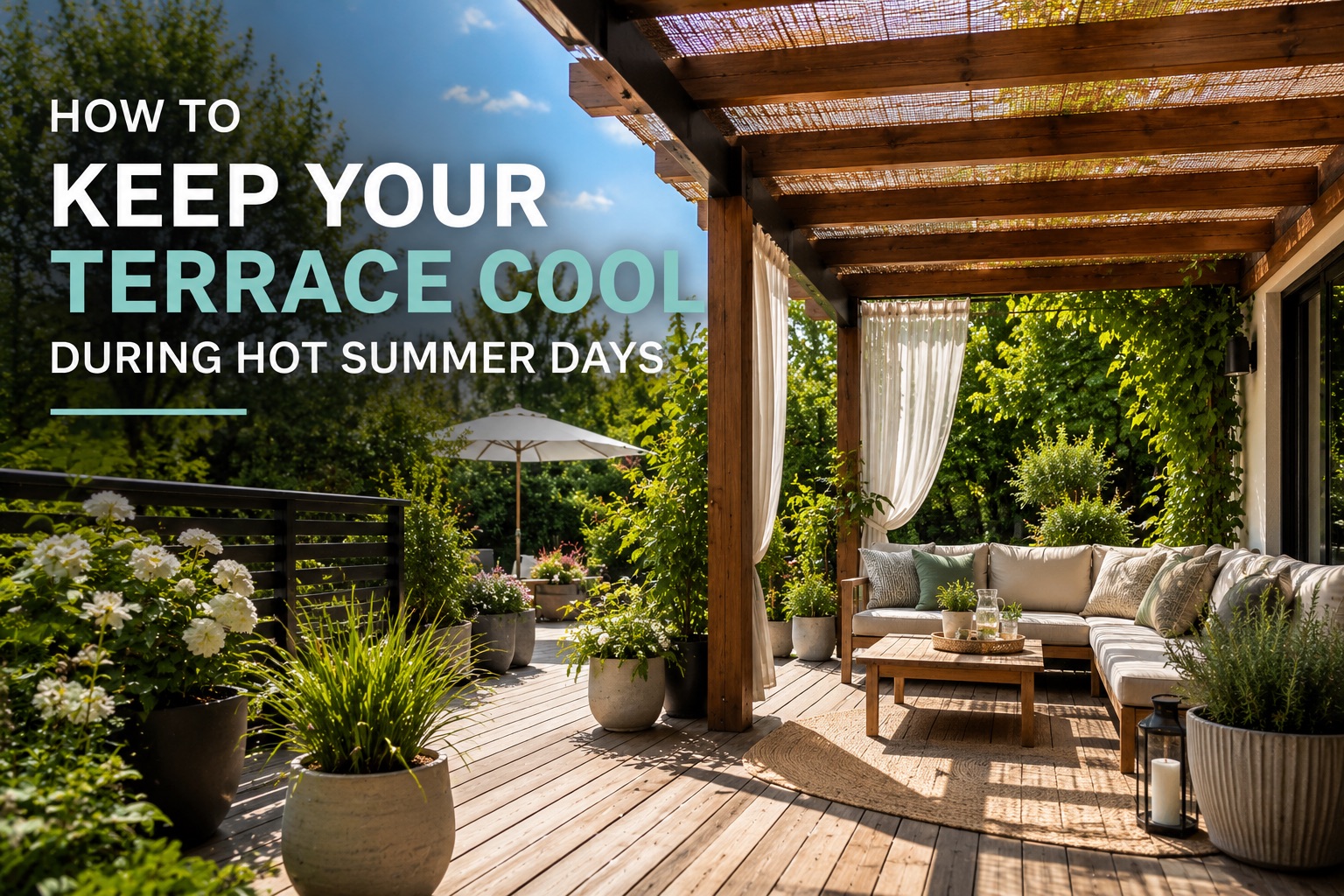
A terrace is one of the best places to relax during summer. However, when temperatures rise, direct sunlight can quickly make outdoor spaces uncomfortable.
Fortunately, there are several effective ways to keep your terrace cool and enjoyable, even during the hottest days of the year. By combining smart design choices, shade solutions, and natural cooling methods, you can create an outdoor space that remains comfortable throughout the summer season.
In this guide, we’ll explore the best strategies to keep your terrace cool while improving both functionality and aesthetics.
Why Terraces Get Hot in Summer
Before exploring solutions, it’s important to understand why terraces become excessively warm.
Several factors contribute to heat buildup:
- Direct sunlight exposure
- Heat absorption from decking materials
- Lack of shade structures
- Limited airflow
- Reflection from nearby walls and windows
As a result, surface temperatures on some terrace materials can become significantly hotter than the surrounding air.
The good news is that proper planning can dramatically reduce these effects.
1. Install a Pergola for Shade
One of the most effective ways to keep your terrace cool is by adding a pergola.
A pergola provides partial shade while maintaining an open and airy atmosphere. Furthermore, modern pergolas can be customized with adjustable louvers, retractable roofs, or fabric covers to provide additional sun protection when needed.
Benefits of a pergola include:
- Reduced direct sunlight
- Improved comfort during peak hours
- Enhanced terrace aesthetics
- Increased usability throughout the day
For many homeowners, a pergola is the ideal balance between sunlight and shade.
2. Add Retractable Awnings
Retractable awnings offer flexible protection from the sun.
Unlike permanent structures, awnings can be extended when shade is needed and retracted when you want to enjoy the sunshine. Consequently, they provide excellent versatility for changing weather conditions.
They are particularly useful for terraces attached directly to the home.
3. Use Outdoor Curtains or Shade Screens
Outdoor curtains and shade screens can significantly reduce heat while creating a more private outdoor environment.
These additions help block low-angle sunlight during mornings and evenings. In addition, they can reduce glare and improve comfort for outdoor dining and relaxation.
Popular options include:
- Weather-resistant fabric curtains
- Bamboo screens
- Privacy panels
- Mesh shade systems
4. Incorporate Natural Shade with Plants
Nature provides one of the most effective cooling systems available.
Strategically placed trees, climbing plants, and large shrubs can create natural shade while improving the overall appearance of your terrace.
Some excellent options include:
- Climbing vines on pergolas
- Ornamental trees
- Tall potted plants
- Decorative hedges
Moreover, plants help cool the surrounding air through a natural process called transpiration.
5. Choose Heat-Resistant Decking Materials
Not all decking materials absorb heat equally.
Darker surfaces tend to retain more heat, while lighter-colored materials remain cooler under direct sunlight. Therefore, selecting the right decking material can have a noticeable impact on terrace comfort.
Many homeowners choose:
- Light-colored hardwoods
- Thermally modified wood
- Composite decking with heat-reflective technology
When designing a new terrace, material selection should always be considered alongside aesthetics.
6. Improve Air Circulation
Good airflow is essential for maintaining a comfortable outdoor environment.
Terraces surrounded by walls, fences, or dense landscaping may trap heat and reduce natural cooling. Therefore, creating pathways for air movement can significantly improve comfort levels.
Simple improvements include:
- Open pergola designs
- Strategic furniture placement
- Ventilated privacy screens
- Proper spacing between structures
Even a gentle breeze can make a substantial difference during hot weather.
7. Add an Outdoor Ceiling Fan
If your terrace includes a pergola, veranda, or covered roof structure, an outdoor ceiling fan can be an excellent addition.
Fans improve air movement and create a cooling effect on the skin. As a result, the space feels noticeably cooler even when temperatures remain high.
Modern outdoor fans are designed to withstand weather conditions while complementing contemporary terrace designs.
8. Install a Shade Sail
Shade sails have become increasingly popular for modern outdoor spaces.
These tensioned fabric structures provide broad sun coverage while maintaining a minimalist appearance. Furthermore, they are available in various shapes, sizes, and colors to suit different architectural styles.
Advantages include:
- UV protection
- Modern aesthetics
- Cost-effective installation
- Flexible positioning
9. Introduce Water Features
Water naturally contributes to cooling outdoor environments.
Features such as fountains, water walls, or decorative ponds can help reduce the perception of heat while creating a relaxing atmosphere.
Additionally, the sound of moving water enhances the overall outdoor experience and promotes relaxation.
10. Select Appropriate Outdoor Furniture
Furniture selection can also influence comfort during hot weather.
Metal furniture exposed to direct sunlight often becomes extremely hot. In contrast, wood, wicker, and fabric-covered seating generally remain more comfortable.
Consider:
- Light-colored cushions
- Breathable fabrics
- Wooden furniture
- UV-resistant materials
These choices improve comfort while extending the lifespan of outdoor furnishings.
Combine Multiple Cooling Solutions for the Best Results
The most effective terraces rarely rely on a single cooling method.
Instead, successful designs combine several elements, such as:
- A wooden terrace
- A pergola or awning
- Natural greenery
- Comfortable furniture
- Good airflow
Together, these features create a balanced outdoor space that remains inviting even during the hottest summer days.
Why Wooden Terraces Stay More Comfortable
Wood is naturally more comfortable underfoot than many alternative materials.
Unlike stone or concrete, wood does not absorb and retain excessive amounts of heat. Consequently, wooden terraces often remain more pleasant during warm weather, particularly when paired with proper shade solutions.
This is one reason why wooden terraces continue to be a popular choice for homeowners throughout Lithuania.
Final Thoughts
Learning how to keep your terrace cool can dramatically improve your outdoor living experience.
By incorporating shade structures, improving airflow, choosing appropriate materials, and adding natural greenery, you can create a comfortable terrace that remains enjoyable throughout the summer season.
Whether you’re building a new terrace or upgrading an existing one, investing in cooling solutions will help you maximize the value and usability of your outdoor space for years to come.